Address
304 North Cardinal
St. Dorchester Center, MA 02124
Work Hours
Monday to Friday: 7AM - 7PM
Weekend: 10AM - 5PM
Address
304 North Cardinal
St. Dorchester Center, MA 02124
Work Hours
Monday to Friday: 7AM - 7PM
Weekend: 10AM - 5PM


Have you ever detected some “strange” notes in a perfume? Things like glue, gasoline, or even gunpowder?
At first sniff, these scents might not be pleasant, but some of them grow on you the more you smell them. In fact, these quirky scents are all carefully crafted by perfumers.
Today, let’s explore where these unusual scents in perfumes come from and what kind of charm they bring to the fragrance.
—— The Smell of Gasoline ——
Many people have an inexplicable fascination with the smell of gasoline. This is actually because certain organic compounds in gasoline stimulate the sense of smell, creating a brief sense of pleasure.
Of course, perfumes don’t actually contain gasoline.

Perfumers often use specific aromatic ingredients (such as tolualdehyde) layered with violet leaf, leather, or animalic notes to create scent associations reminiscent of motor oil or gasoline.
The scent of gasoline typically appears alongside leather, making the leather feel less warm and supple, and instead colder, harder, and more angular.
Representative Fragrance:
Dior Fahrenheit
—— The Smell of Glue ——
There are two types of glue-like scents in perfumes. One is a pungent odor caused by low-quality fragrance oils or industrial solvents; the other is a deliberate choice by the perfumer.

This scent typically originates from ester molecules such as ethyl acetate. At low concentrations, it has a clean, sweet, fruity aroma; at slightly higher concentrations, it evokes associations with glue, nail polish, or plastic products.
This scent is often used in avant-garde or futuristic perfumes to challenge the conventional notion that “perfume must smell good.”
Representative Fragrance:
Comme des Garcons
—— The Smell of Gunpowder ——
The scent of gunpowder in perfume is entirely man-made.
Perfumers use smoky ingredients like birch tar to mimic the scent of burning flames, then incorporate aldehydes or synthetic musks to create a lingering afterglow reminiscent of gunpowder exploding, evoking the atmosphere of “fading fireworks” or “a gun barrel just cooled.”

Gunpowder rarely takes center stage; instead, it serves as an accent, blending with rich spices like agarwood and patchouli to create a powerful, dark tension.
Signature Fragrance:
Comme des Garcons Amazingreen
—— Metallic Notes ——
Metal itself is virtually odorless, but when it comes into contact with the skin, it evokes a sensation reminiscent of rust.
In perfumes, metallic notes are typically achieved through aldehyde molecules. They are cold, sharp, and clean, easily bringing to mind steel, blood, rust, or sterilized instruments.

If used improperly, it can come across as harsh or even off-putting; but when used just right, it can instantly give a fragrance a modern, rational, and tech-inspired feel.
In particular, adding a touch of metallic notes to traditional floral or woody scents can produce a stunning effect.
Representative Fragrance:
Penhaligon’s Sartorial
—— The Smell of Dust ——
From a scientific perspective, the smell of dust we encounter in our daily lives is actually a mixture of odors produced when tiny dust particles absorb impurities from the surrounding environment (such as moisture, skin flakes, or fibers).

The dusty quality in perfumes is more like an evocation of space and time.
Ingredients such as orris root, vetiver, and certain synthetic musks all impart a dry, soft, dusty sensation, evoking images of old book pages, aged wooden floors, and dust motes floating in the sunlight.
Used in moderation as a “balancing agent,” this dusty quality can soften overly sweet or bright scents, adding depth and richness, while also easily evoking feelings of nostalgia and tranquility.
Representative Fragrance:
Geoffrey Beene Eau de Grey Flannel
—— The Scent of Camphor ——
The scent of camphor is very distinctive; many people associate it with camphor balls, mentholated oil, and old-fashioned ointments.
In perfumery, in addition to using natural camphor directly, perfumers often rely on ingredients such as lavender, tuberose, and eucalyptus to recreate a similar cool, medicinal sensation.
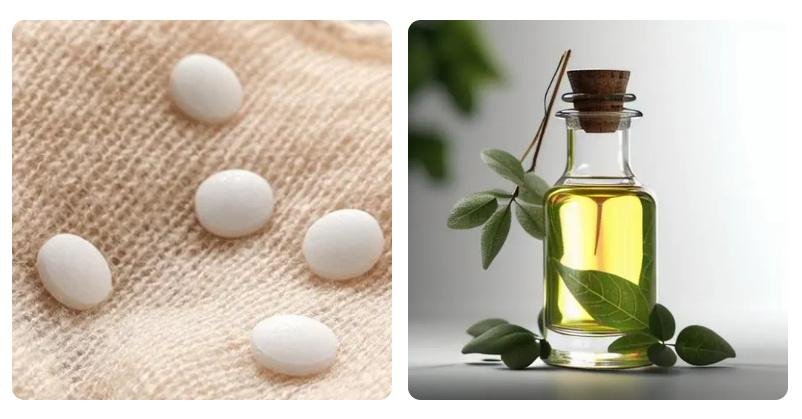
This scent balances out cloying sweetness, making the fragrance feel lighter and more airy.
Camphor works particularly well when paired with medicinal or resinous notes, creating a vintage apothecary-like atmosphere.
Signature Fragrance:
Etat Libre d′Orange Archives 69
—— EARTHY NOTES ——
The scent of soil is brimming with the vitality of nature.
The earthy notes in perfumes primarily come from a volatile compound called “geosmin,” which has a very authentic, damp, post-rain earthy scent.

In addition, natural ingredients such as patchouli, oakmoss, and vetiver naturally evoke earthy notes: patchouli and oakmoss possess a damp, green, earthy scent; vetiver’s earthy note is drier, with a subtle smoky undertone.
Earthy notes are often used to evoke natural settings such as forests and meadows, lending the fragrance a sense of authenticity.
Representative Fragrances:
Lalique Encre Noire
—— The Scent of Disinfectant ——
The scent of disinfectant is crisp and clean, often evoking images of hospitals, laboratories, or operating rooms.
In perfumes, this scent is typically crafted from sharp, cool aldehydes paired with herbal or medicinal notes, creating an atmosphere of purity, rationality, and detachment.

It really tests your sense of balance; if handled well, it comes across as incredibly clean and orderly, but the slightest imbalance can quickly make it feel overpowering.
Featured Fragrance:
Byredo Rose of No Man’s Land EDP
The unusual notes in a perfume aren’t meant to please everyone. They’re more like clues planted by the perfumer to guide us toward a particular scene, memory, or emotion.
The next time you come across a perfume that doesn’t smell “very good” at first sniff, perhaps give it a little more time. Maybe it’s telling a story that’s open only to a select few.